

Half the buyers out there are worried home prices are about to crash. The other half are hoping they will.
A recent survey from Clever found that 58% of Gen Z buyers are actually rooting for a crash, simply because they want homeownership to feel more affordable.
So, what do the forecasts actually say?
Every quarter, Fannie Mae surveys more than 100 housing experts on where home prices are headed. The newest results are in, and the takeaway is clear: they’re not calling for a crash — not even the more pessimistic experts.
If you’re watching the Northern Colorado real estate market, this national outlook provides helpful context, but local conditions still matter when deciding whether to buy, sell, or wait.
What the Newest Numbers Actually Say
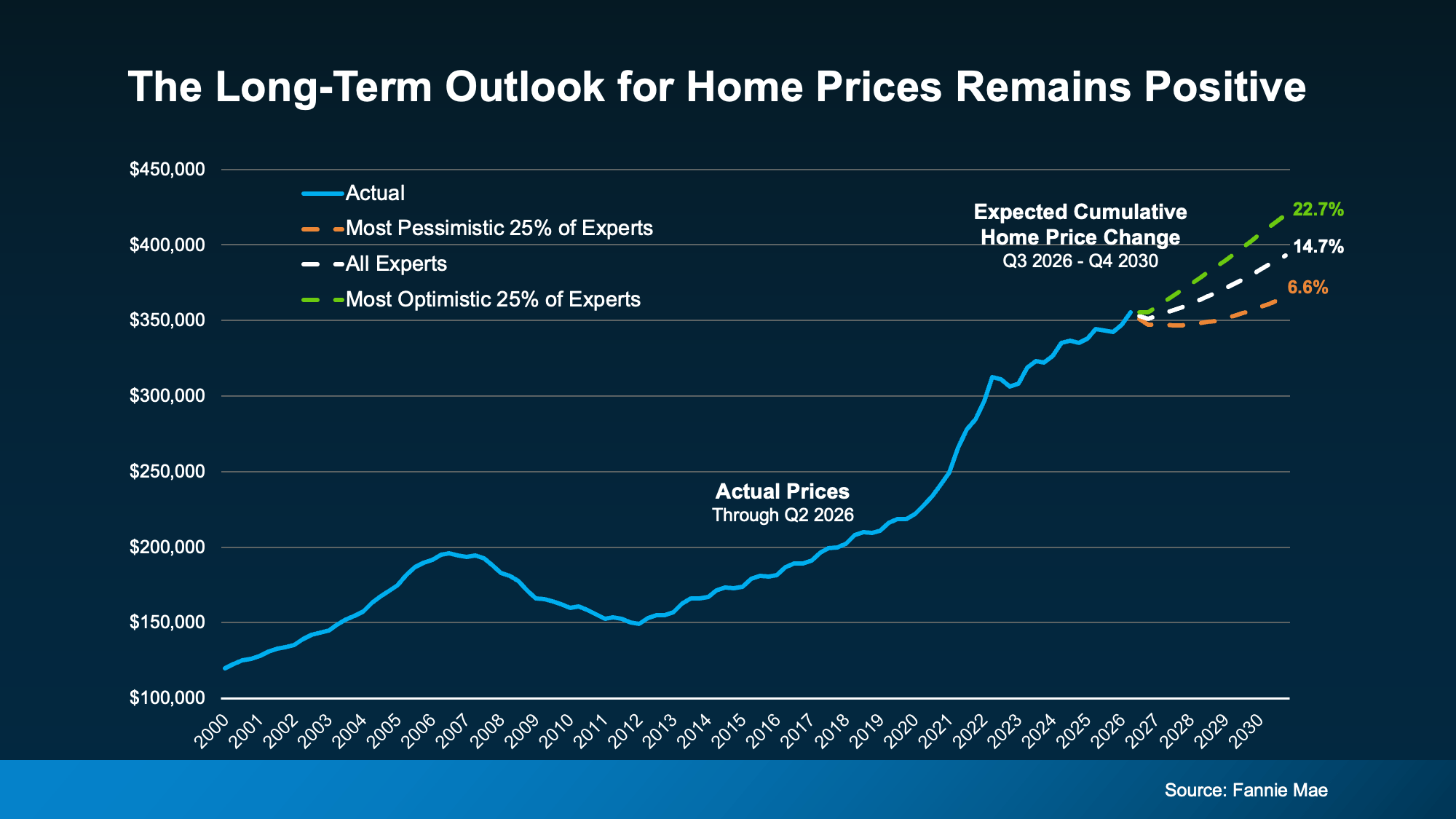
The panel’s latest forecast shows home prices increasing every year through at least 2030.
On average, the experts expect home prices to rise by about 14.7% over the next five years.
And here’s where it gets interesting: even when the panel is divided into more optimistic and more pessimistic groups, the pessimistic group still expects prices to increase by approximately 6.6% by the end of 2030. (see graph below):
The takeaway?
If you’ve been waiting for home prices to fall significantly before buying, you may be waiting longer than expected.
Of course, these are national numbers. Home prices in Northern Colorado could move faster or slower depending on inventory, buyer demand, mortgage rates, new construction, and the specific community you’re considering.
That’s why understanding your local market is so important.
For anyone considering buying a home in Northern Colorado, the bigger question may not be whether prices will crash, but whether waiting will actually improve your buying position.
How This Quarter Compares to the Past
Here’s something many buyers may not realize: this Fannie Mae survey is conducted four times every year, which makes it possible to see how experts’ expectations change over time.
A year ago, the panel expected home prices to grow by about 2.1% this year.
Now, the forecast is closer to 2.5%.
That means the near-term outlook has actually become slightly more optimistic.
But the longer-term forecasts have shifted too. (see graph below):
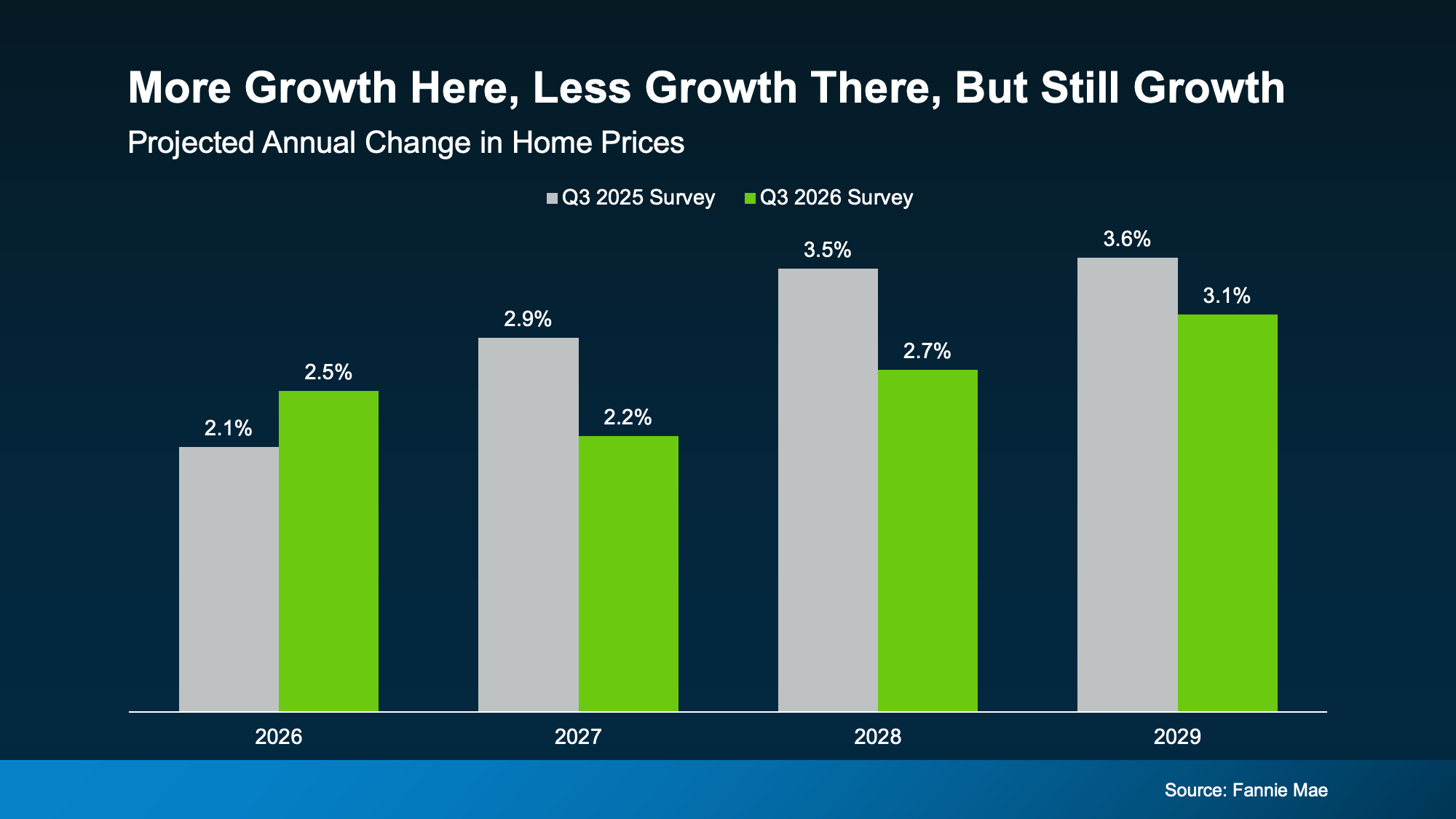
Looking ahead to 2027 through 2029, experts are now projecting somewhat slower price growth than they were a year ago.
That doesn’t mean prices are expected to fall.
It means the pace of appreciation may moderate.
And after several years of unusually fast home-price growth, a slower and more sustainable pace could actually be a healthy sign for the housing market.
A little more growth one year and a little less the next may be normal.
What hasn’t changed is the expectation that home prices will continue increasing over time.
A little more growth here, a little less growth there. What hasn’t budged once is the idea that home prices will keep growing.
What It Means for Your Next Move
National forecasts are useful, but real estate is always local.
The Northern Colorado housing market can behave differently from national averages, and even nearby communities can experience different pricing trends.
A buyer considering a home in Greeley may face different conditions than someone looking in Longmont, Frederick, Firestone, Brighton, or another Northern Colorado community.
Inventory levels, competition, price range, property condition, and location can all influence how much negotiating power buyers have.
That’s why it’s important to look beyond national headlines and understand what’s happening in the exact area where you want to buy. (see graph below):
What It Could Mean for Your Equity
Percentages are helpful, but most buyers want to know what price appreciation could mean in actual dollars.
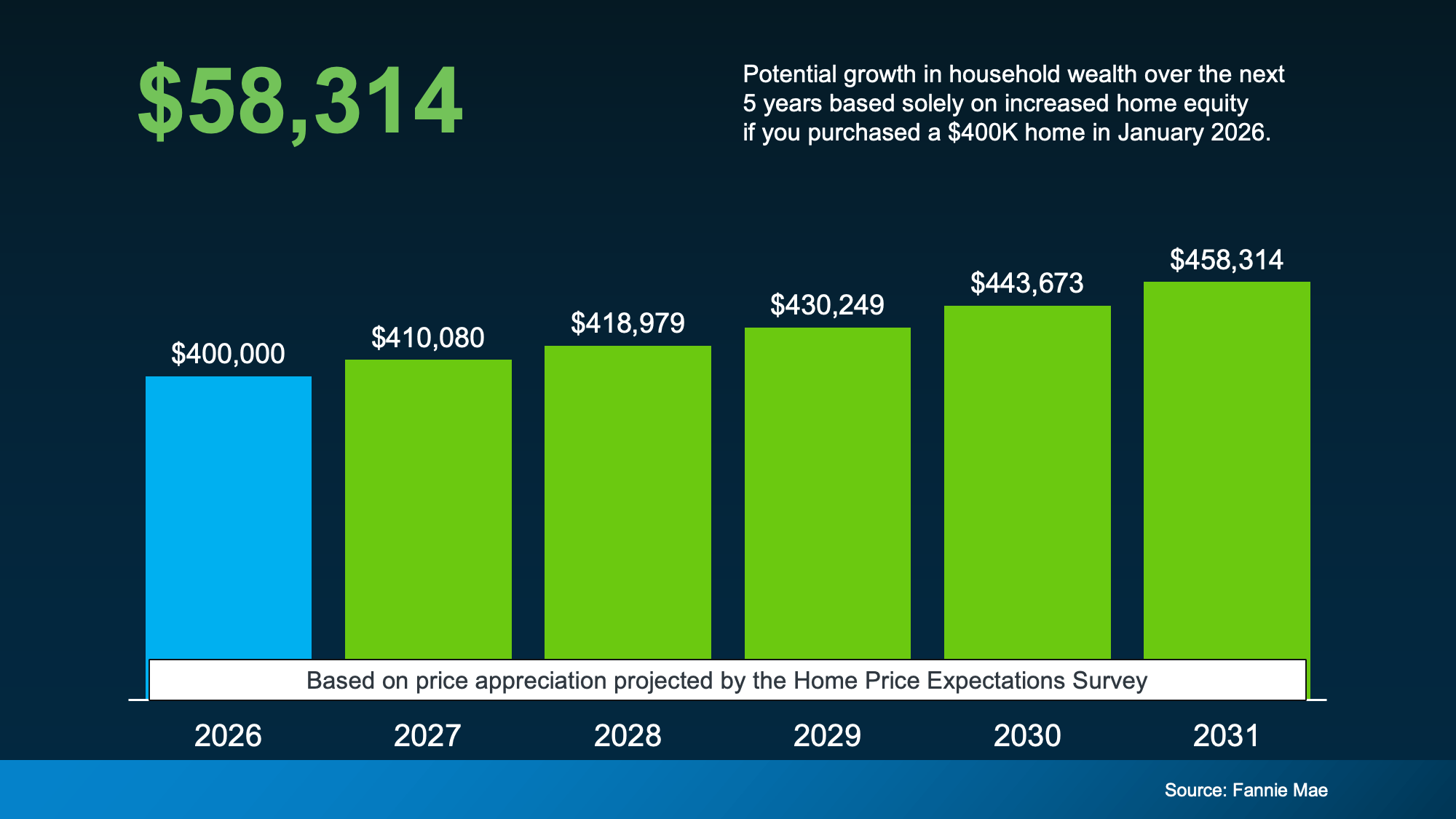
For example, consider a home purchased for $400,000.
Based on the panel’s current forecast of roughly 14.7% appreciation over five years, that home could potentially gain about $58,000 in value from price growth alone.
That doesn’t account for mortgage principal payments or other factors that can also contribute to homeowner equity.
Of course, appreciation is never guaranteed, and local markets may perform differently.
But it illustrates an important point: waiting for a major housing crash that experts aren’t forecasting could mean missing years of potential equity growth.
For Northern Colorado home buyers, that’s worth considering when comparing the cost of buying today with the potential cost of waiting.
Could Waiting Cost You More?
Waiting to buy can absolutely make sense in some situations.
You may need more time to save for a down payment, improve your credit, reduce debt, or get more comfortable with your monthly payment.
But waiting solely because you expect home prices to crash is a different strategy.
If prices continue to appreciate, even at a slower pace, the same home you’re looking at today could cost more in a few years.
And if mortgage rates change at the same time, your future monthly payment could look very different too.
That’s why the decision to buy should be based on your finances, lifestyle, timeline, and local market conditions — not simply on predictions of a crash.
What This Means for Sellers
The forecast matters for sellers too.
If home prices continue to rise gradually, homeowners may continue building equity over time.
But that doesn’t mean every home can be listed at any price and still sell.
Today’s buyers are more price-conscious and have more information available to them.
If you’re thinking about selling a home in Northern Colorado, understanding recent comparable sales, current competition, buyer demand, and pricing trends in your neighborhood is much more useful than relying on national headlines alone.
A market can still appreciate overall while individual homes require careful pricing and positioning to attract buyers.
Bottom Line
Whether you’re worried about a housing crash or hoping prices will fall enough to make buying easier, current expert forecasts point in the same direction: home prices are expected to keep rising, not collapse.
That doesn’t mean every market will grow at the same pace, and it doesn’t mean buying is automatically the right move for everyone.
But if you’re considering buying or selling a home in Northern Colorado, it’s worth looking at what’s actually happening in your local market instead of waiting for a nationwide crash that experts currently don’t expect.
Let’s look at the latest pricing, inventory, and buyer activity in your area so you can make your next move based on the numbers that matter most to you.