

Price reductions are becoming much more common in today’s housing market, but what they mean depends heavily on whether you’re buying or selling.
For sellers, a price cut can feel discouraging. It may seem like you’re giving up money or admitting the home was priced incorrectly. Sometimes that is the case, but often it simply means the market has shifted since the home was first listed.
For buyers, a price reduction can raise questions: Is something wrong with the house? Why hasn’t it sold?
In many cases, there’s nothing wrong with the property at all. The seller is simply adjusting to what buyers are willing and able to pay in the current market.
Here’s what’s driving the increase in price reductions and what buyers and sellers should know.
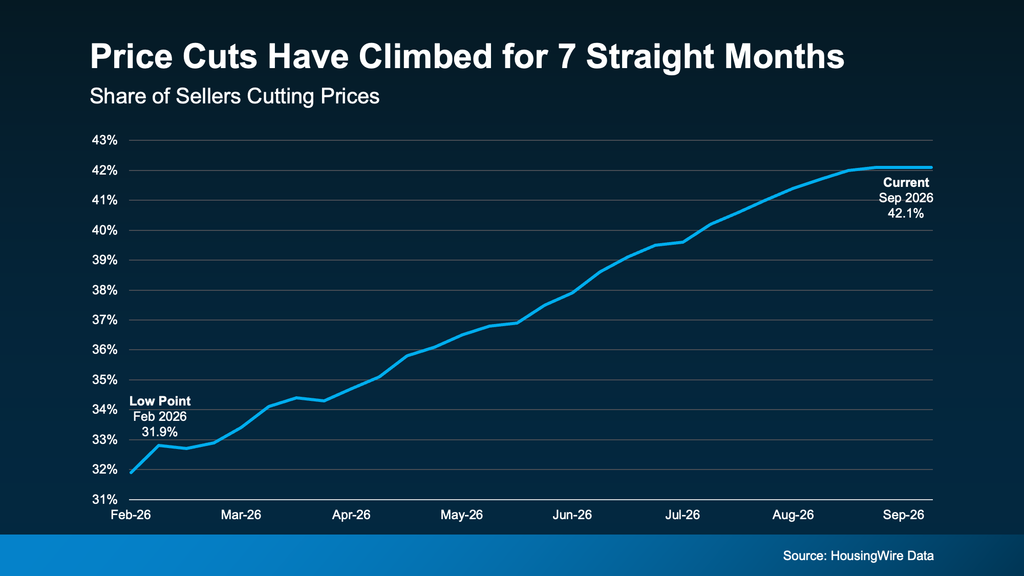
More Than 4 in 10 Listings Have Had a Price Cut
According to HousingWire Data, the percentage of sellers reducing their asking price has increased for seven consecutive months.
Today, more than 42% of active listings have experienced at least one price reduction, with the typical reduction totaling approximately $17,560.
Why?
Mortgage rates remain elevated, buyers have more homes to choose from, and affordability continues to influence purchasing decisions. Buyers can afford to be more selective, which means homes that are priced above the competition may sit longer.
That makes accurate pricing especially important.
What This Means for Sellers
A price reduction isn’t necessarily a sign that something has gone wrong.
But it does highlight why pricing correctly from the beginning is so important.
In a changing market, even a home that appeared appropriately priced when it first hit the market can fall behind competing listings within a few weeks. New inventory, recent sales, buyer activity, interest rates, and competing price reductions can all change the picture quickly.
When that happens, adjusting the price sooner rather than later can help bring buyers back through the door and keep the listing from becoming stale.
For sellers navigating Northern Colorado real estate, this is especially important because market conditions can vary dramatically from one city, neighborhood, and even price range to another.
The strategy that works in Firestone may be different from what works in Frederick, Longmont, Brighton, Greeley, or another nearby community.
Sellers Are Becoming More Realistic About Pricing
HousingWire Data also shows national list prices trending lower.
That can actually be a positive sign.
Instead of starting significantly above market value and making multiple reductions later, more sellers appear to be adjusting their expectations earlier and pricing closer to current buyer demand.
Nationally, list prices have fallen roughly $26,000 from last year’s peak.
Some of that decline is seasonal. Home prices and buyer activity commonly soften during the fall and winter months before activity begins picking up again in the spring.
But affordability matters too.
As Realtor.com Senior Economist Jake Krimmel explained, lower asking prices and increased negotiating room can benefit buyers while realistic pricing helps sellers keep transactions moving in a higher-rate environment.
The takeaway for sellers is simple: the market ultimately determines what a home is worth.
You can choose the list price, but buyers determine whether that price is competitive.
Buyers Have More Negotiating Power
Another major change in the market is the balance between buyers and sellers.
Redfin data shows sellers now significantly outnumber buyers nationally, giving buyers more choices and more negotiating leverage than they had during the extremely competitive housing market of recent years.
For sellers, that means your home isn’t being evaluated in isolation.
Buyers are comparing your property against every other home available in the same price range. Condition, location, updates, incentives, monthly payment, and price all influence which home they choose.
Sometimes flexibility can make the difference.
That could mean contributing toward closing costs, offering an interest-rate buydown, addressing inspection concerns, adjusting possession timing, or making a strategic price change.
For buyers, increased inventory can create opportunities to negotiate things that were much harder to ask for a few years ago, including:
- A lower purchase price
- Seller-paid closing costs
- Inspection repairs or credits
- Interest-rate buydowns
- Flexible closing or possession dates
Homes that have been on the market longer or have already experienced a price reduction may provide even more negotiating opportunity.
That doesn’t mean every seller will accept a significantly lower offer. It means buyers once again have room to have the conversation.
A Price Cut Doesn’t Automatically Mean It’s a Deal
Buyers should also be careful not to assume every reduced home is automatically a bargain.
A home can be reduced and still be overpriced.
The better question is whether the home is now priced appropriately compared with recent sales, current competition, condition, location, and buyer demand.
That’s where local market knowledge matters.
A price reduction can create an opportunity, but the numbers still need to make sense.
What Sellers Should Focus on Right Now
For sellers, the biggest mistake in a shifting market is waiting too long to react.
If your home is getting showings but no offers, buyers may be telling you the price is close but not quite there.
If you’re getting very few showings, the price may be too high compared with what else buyers can purchase.
And if similar homes are selling while yours remains active, it’s important to look closely at the differences in price, condition, location, features, incentives, and presentation.
The goal isn’t simply to lower the price.
The goal is to position the home where buyers see enough value to act.
What Buyers Should Focus on Right Now
For buyers, today’s market may offer more options than you realize.
Instead of focusing only on newly listed homes, it can be worth looking at properties that have been sitting on the market, recently reduced their price, or fallen out of contract.
Those sellers may be more open to negotiation.
A strong offer doesn’t always mean offering the highest price. Depending on the property, it may be possible to negotiate a combination of purchase price, closing-cost assistance, repairs, or financing incentives that creates a better overall deal.
Bottom Line
Price cuts are becoming a normal part of today’s housing market.
For sellers, they’re a reminder that pricing and positioning matter from the very beginning.
For buyers, they can create opportunities to negotiate that weren’t available during the highly competitive market of the past few years.
The most important thing is understanding what’s happening in your specific area because real estate is always local.
If you’re thinking about buying or selling in Northern Colorado, let’s look at the current competition, recent sales, and buyer activity in your neighborhood so you can make your next move with a clear strategy.